Human Anthrop Exercise:
GUM POLE EXERCISE :

spaces Exercise:


EASY EXERCISES:
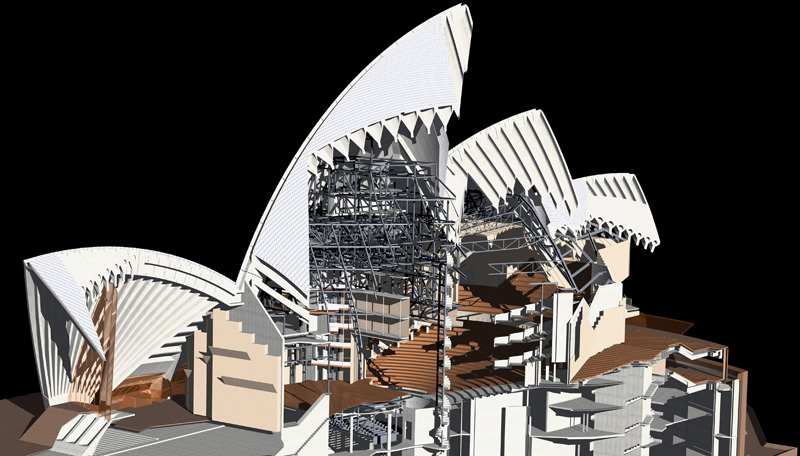
The Opera house
THE COSTRUCTION
The original requirements set out in the competition were for two multi-use halls. In the process of its realisation, after Utzon’s departure in 1966, these requirements were lost sight of and Grand Opera was abandoned in the Major Hall, with opera relegated to the Small Hall, which was intended as a theatre.
The building covers about 1.8 hectares (4.5 acres) of its 2.2 hectare (5.5 acre) site. It has about 4.5 hectares (11 acres) of usable floor space.
It is approximately 185 m (611 ft) long and 120m (380 ft) wide at its widest point. The highest roof vault (above the Concert Hall) is 67m (221 ft) above sea level.

THE BUILDING DURING THE CONSTRUCTION

MATERIALS USED ON SITE

TILES ( USED AS A ROOF COVERING).
The roofs are made up of 2,194 pre-cast concrete sections
Single skin reinforced concrete with ribs
Single skin shell with ribs
Double skin reinforced concrete with 2-way ribs and structural louvre wall
Steel space frame with reinforced concrete skin, louvre shell replacing louvre
INTERIOR
The exterior and interior walls, stairs and floors are faced with pink aggregate granite which was quarried at Tarana in New South Wales. The two woods used extensively to decorate the interiors are brush box and white birch plywood which were both cut in northern NSW.
STRUCTURE
The entire building weighs 161,000 tonnes. It is supported on 580 concrete piers sunk up to 25 m (82 ft) below sea level. The roofs are supported on 32 concrete columns up to 2.5 m (8 ft) square.
The exterior and interior walls, stairs and floors are faced with pink aggregate granite which was quarried at Tarana in New South Wales